
The National Payments Corporation of India (NPCI) is set to consider linking the ATM interchange fee to the Wholesale Price Index (WPI), alongside a potential hike from the current 19 to 21-22, which could impact customer charges for transactions beyond the free limit.
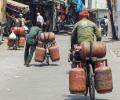
'If 5% of the total revenue was spent on LPG (pre-war), it is now expected to double. The overall food cost in restaurants is expected to rise by 4-6%.'

India's net oil import bill could rise by $56 billion to $64 billion annually assuming global crude averages $110 to $115 per barrel in FY27.

'The MPC is likely to prioritise the key mandate, which is inflation, while relying on other instruments to stabilise the currency and bond markets.'
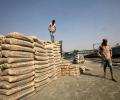
Indian cement manufacturers, despite a stable Q4FY26, are bracing for significant profitability pressures from Q1FY27 onwards due to escalating input costs, primarily driven by the West Asia conflict's impact on coal and petcoke prices.

Indian realty developers are contemplating price increases for ongoing and upcoming projects to offset margin pressures caused by rising input costs and supply chain disruptions, exacerbated by the West Asia conflict. Input and labour costs have surged by 5-12%, directly impacting developer margins, especially for under-construction projects.

MNS president Raj Thackeray questions the fuel consumption during recent election campaigns, asking if austerity measures are only meant for the common people.

'Energy prices would shoot up with the closure of Hormuz again.'

External Affairs Minister S Jaishankar has affirmed India's commitment to ensuring issues like a free, open, and rule-based maritime order, seafarer safety, and countering terror financing receive due attention at the UN Security Council during its 2028-29 term.

Bajaj Auto, the sole player in India's CNG-powered motorcycle segment, has seen a dramatic drop in registrations for its Freedom 125 CNG bike, from a peak of 12,167 in November 2024 to just 1,211 in May this year, primarily due to reduced price arbitrage between petrol and CNG and growing availability challenges.

While the new Brezza keeps its tried and tested 1.5 litre NA engine, there is now an additional 1.0l turbo petrol unit with a 6-speed manual gearbox to tempt younger buyers, points out Somnath Chatterjee.
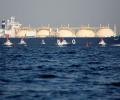
Analysts predict India will face oil price volatility and macroeconomic effects due to the escalating Iran crisis, though the country's oil supply chain is not yet structurally insecure.

The Indian government has restricted industrial, commercial, and institutional users from purchasing petrol and diesel from retail petrol pumps, directing them to bulk sale points instead. This move, which can last up to 90 days, aims to address abnormal demand growth and prevent localised shortages caused by a significant price difference between retail and bulk fuel prices.

'I am now driving an electric vehicle. I have lost faith in petrol-run cars.'

Despite aggressive expansion, India's solar power sector faces significant hurdles from rising regional disparities in installed capacity and a looming manufacturing glut due to overcapacity in domestic solar equipment production, potentially leading to consolidation and pricing pressures.

Jan Suraaj Party founder Prashant Kishor has moved to an ashram on the outskirts of Patna to continue his political activities ahead of the next assembly elections. He criticised Nitish Kumar and urged voters to prioritise their own interests.

Amul and Mother Dairy, India's largest dairy product retailers, have increased milk prices by Rs 2 per litre, marking the second such hike in 13 months. This move is expected to intensify inflationary pressures, already fuelled by global conflicts, and will impact household budgets across the country.

'There is no shortage of fuel whatsoever.' 'India is stock surplus as far as petrol and diesel are concerned.'

Indian benchmark stock indices, Sensex and Nifty, recorded their fourth consecutive day of declines, driven by selling in FMCG, financial, and auto sectors. The downturn is attributed to fresh tensions in the Middle East, uncertainty surrounding the US-Iran 60-day ceasefire, and elevated crude oil prices.

Companies are already diversifying sourcing, raising prices, and reworking operating models as the disruption drags on.

India has launched its first hydrogen-powered train, the 'Namo Green Rail', from Jind, Haryana, marking a significant step towards sustainable railway mobility. The 10-coach train, which emits only water vapour, is currently operating on the Jind-Sonipat route and represents a major technological advancement for the country's transport sector.
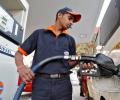
Global oil prices have slumped and India has access to larger amounts of discounted Russian crude oil, yet refiners are not passing on their savings to consumers

'The market is currently neither cheap enough to be exciting about nor expensive enough to worry about.'

Sensex gains over 400 points while Nifty trades above 23,800 amid strong IT sector buying.

Reliance Industries Ltd reported a 22 per cent year-on-year decline in consolidated net profit for the June quarter, primarily because the previous year's earnings were inflated by a one-time gain from the sale of its stake in Asian Paints.

Jet fuel or ATF price on Tuesday was hiked by a steep 8.5 per cent - the second increase in a month, while commercial cooking gas rate was cut by Rs 100 per cylinder in line with divergent trends in international benchmarks. Aviation turbine fuel (ATF) price was increased by 7,728.38 per kilolitre, or 8.5 per cent, in the national capital to Rs 98,508.26 per kl, according to a price notification of state-owned fuel retailers. Rates, which vary from state to state depending on the incidence of local sales tax or VAT, have been increased on firming up of global rates that followed four months of decline.
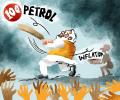
Dominic Xavier offers his take on fuel prices as they surge across the country.
Sri Lankan President Anura Kumara Dissanayake has announced an economic relief package to mitigate the impact of the West Asia conflict, including fuel price reductions and support from India for petrol and diesel supplies.

India's wholesale price inflation surged to 3.88 per cent in March, marking the fifth consecutive monthly increase, primarily driven by a sharp rise in crude petroleum, natural gas, and manufactured items amidst the West Asia crisis.

India's auto retail sector achieved record-breaking sales of 2,96,71,064 units in FY26, a 13.3% increase, primarily driven by the implementation of GST 2.0 which reduced the tax burden on mass-segment vehicles, according to the Federation of Automobile Dealers Associations (FADA).

The Strait of Hormuz crisis is impacting lifestyles worldwide, from reduced gold purchases in India to energy conservation in Europe and Japan, as governments urge citizens to adapt to the global energy shock.

India's automobile retail sales surged by 21.83 per cent year-on-year in June, reaching 25,57,234 units, marking the best June ever recorded across all segments, according to the Federation of Automobile Dealers Associations (FADA).

Indian equity markets experienced a volatile session, with the Sensex and Nifty recovering some ground after a significant plunge the previous day. Gains were driven by PSU bank, IT, and metal stocks, but concerns over rising fuel prices and geopolitical tensions limited the recovery.

Indian Oil, Bharat Petroleum and Hindustan Petroleum raised the aviation turbine fuel price by Rs 585 per kilolitre in Delhi to Rs 32,199 with effect from midnight tonight, an IOC official said. The increase comes on the back of a marginally one per cent reduction effected on May 1, which had brought the rates in Delhi down to Rs 31,614.51 per kl.

Indian benchmark indices Sensex and Nifty experienced a sharp decline in early trading due to escalating tensions in the Middle East, driving crude oil prices higher. Global market bearishness and foreign fund outflows further contributed to investor unease.

Jewellery majors Titan Company and Kalyan Jewellers reported robust Q4 FY26 results, with Titan's consolidated revenue surging 81 per cent year-on-year, largely propelled by a sixfold increase in bullion and digital gold sales. Despite strong top-line growth, Titan's gross and operating profit margins faced pressure due to the higher share of lower-margin gold products and increased marketing expenditure.

Indian oil-marketing companies (OMCs) have incurred LPG underrecoveries of approximately Rs 22,000 crore between March and May 2026, as domestic cooking gas prices failed to keep pace with surging international rates exacerbated by the West Asia crisis, according to a Crisil report.

Foreign investors have largely been exiting one part of the market while domestic investors have been enthusiastically accumulating another, points out Debashis Basu.

Nayara Energy, a private fuel retailer in India, has increased petrol and diesel prices following a surge in global oil prices due to Middle East tensions. This move contrasts with state-owned retailers who continue to freeze prices.
The recent fuel price hike, especially of the diesel, will increase the expenditure bill for the Indian Railways by about Rs 250 crore (Rs 2.5 billion).
